





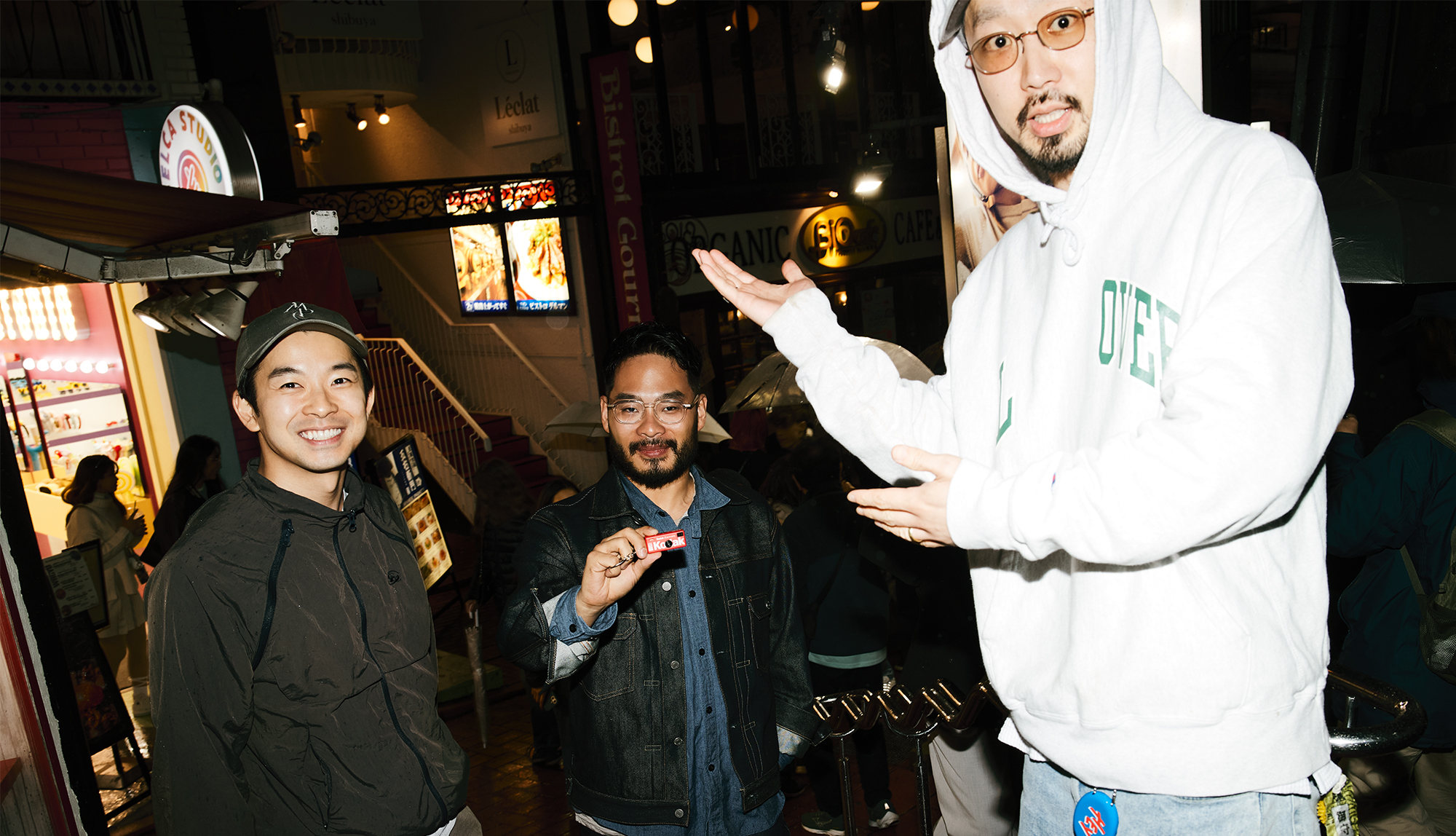
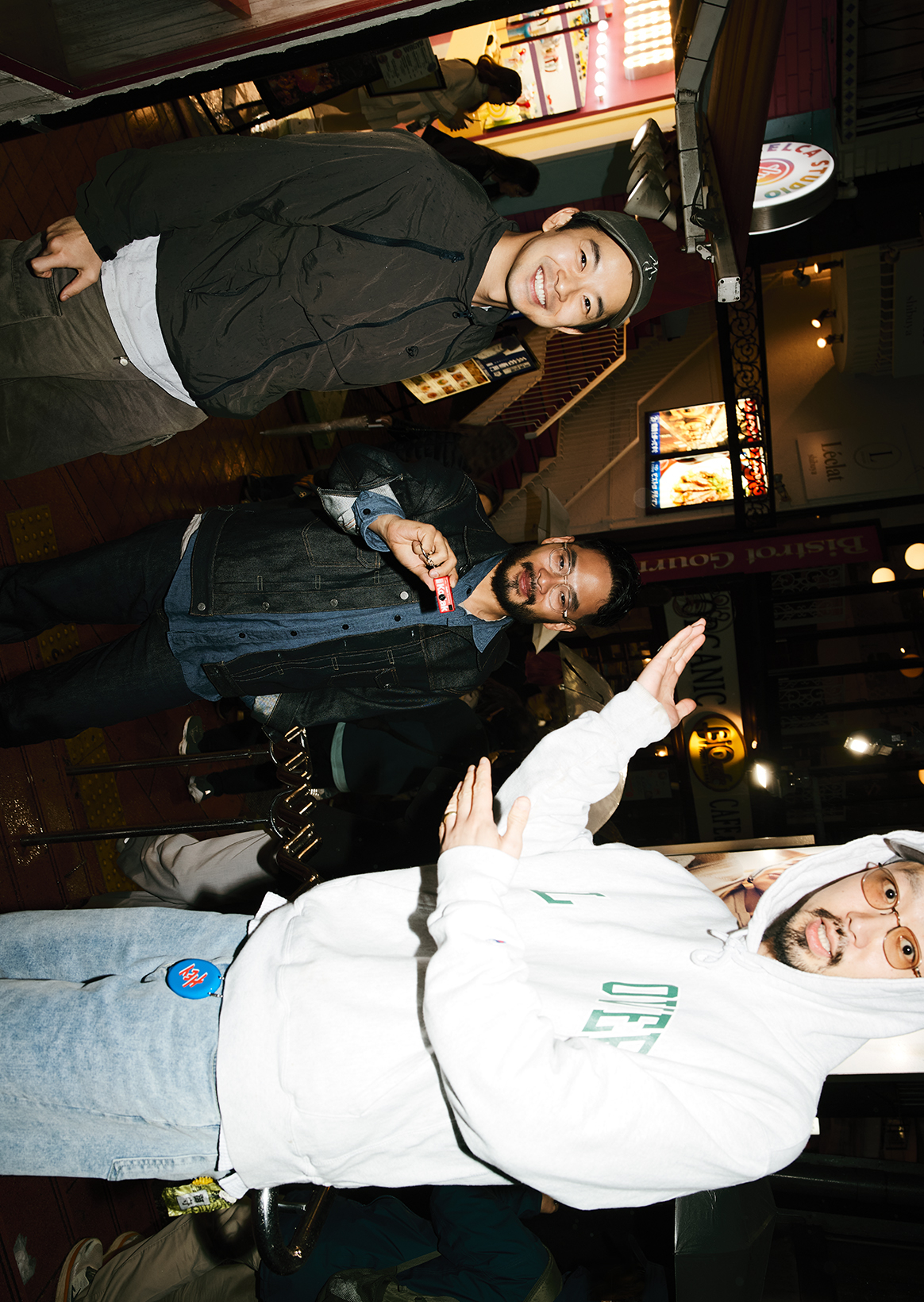
The journey for these three friends began in Nepal’s Langtang Valley, a place often called the most beautiful valley in the world. TV director Ryohei Kamide, photographer Yusuke Abe, and actor Taiga Nakano formed the travel circle Midnight Pizza Club, which has since evolved from a travelogue into a multifaceted project. Reaching audiences through Audible series and various exhibitions, it continues to capture the public's imagination. Now, they are marking the "First Final Stop" of their journey with an exhibition and pop-up shop at Shibuya PARCO. Why are people so captivated by their travels? What does "travel" actually mean to them? We sat down with the trio to discuss the project’s history, the stories behind the scenes, and their vision for this latest exhibition.
- Photo
- Asami Minami
- Text
- Risako Hayashi
- Edit
- RCKT/Rocket Company*
── I heard that you are currently running two projects, an exhibition at GALLERY X BY PARCO and a pop-up shop at DAIROKKAN. To start, I'd like to ask how the group began and about your activities so far. I read your book published in 2024, MIDNIGHT PIZZA CLUB 1st BLAZE LANGTANG VALLEY, and the way it was put together really struck me. Even though it's a travel essay told from Mr. Kamide's first-person perspective, the personalities of the three of you are so distinct that it reads almost like a novel. Did you have all of this in mind, including the book, the Audible series, the exhibitions, and the pop-ups, when you first decided to "travel together" in New York?
Ryohei Kamide (hereafter Kamide): We didn't have everything mapped out from the start. However, we were recording audio and everyone was taking photos, so there was talk about turning it into something eventually. Since all three of us love books, we had a vague idea that "we want to make one."
Yusuke Abe (hereafter Abe): When you're trekking through a valley in Nepal and arrive at the lodge at night, you have plenty of free time. We spent a lot of time brainstorming what the final product should look like, just going back and forth on what would be cool.
Kamide: In the end, we decided to make our own version of a Globe-Trotter guide, and that's how this book came to be.
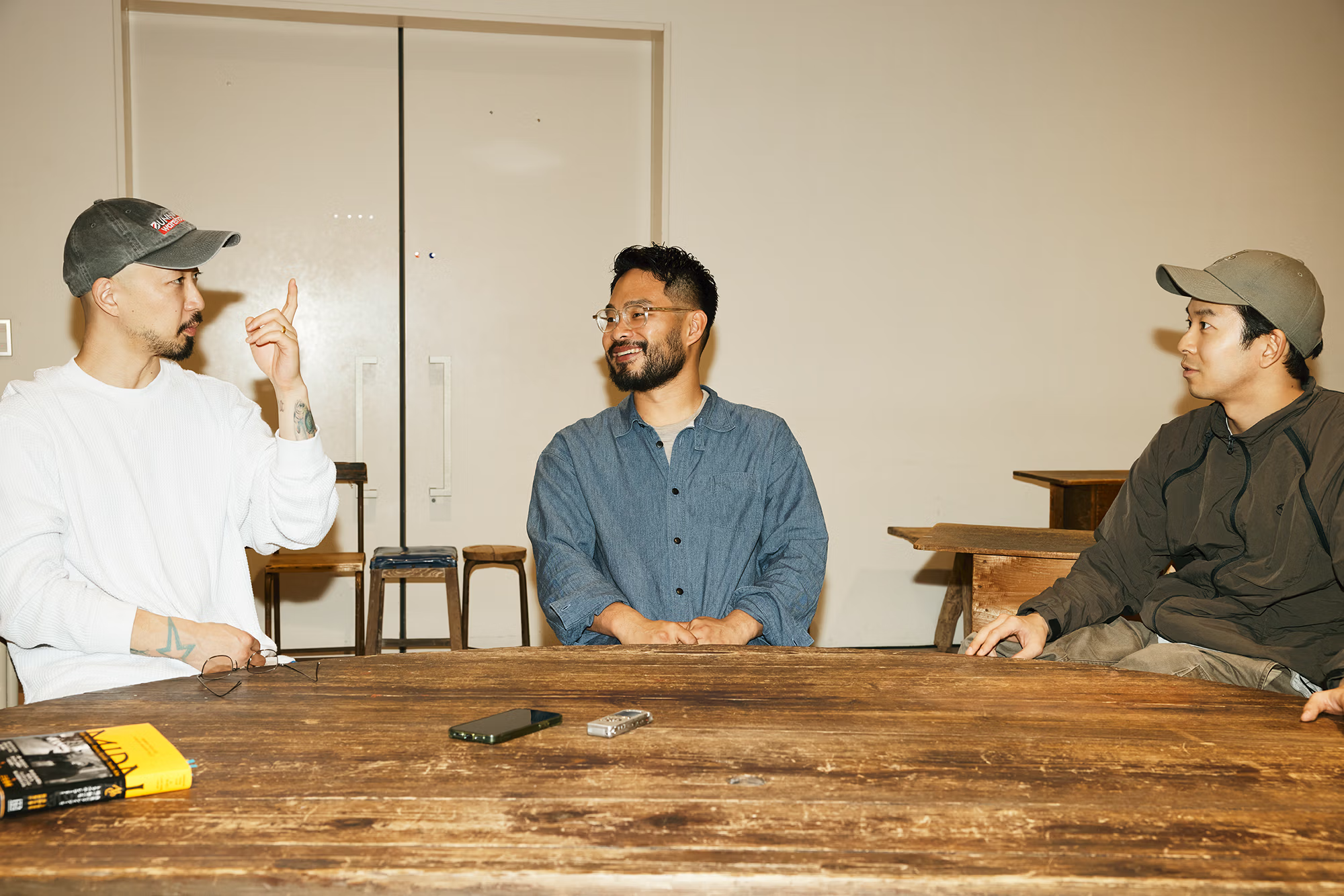
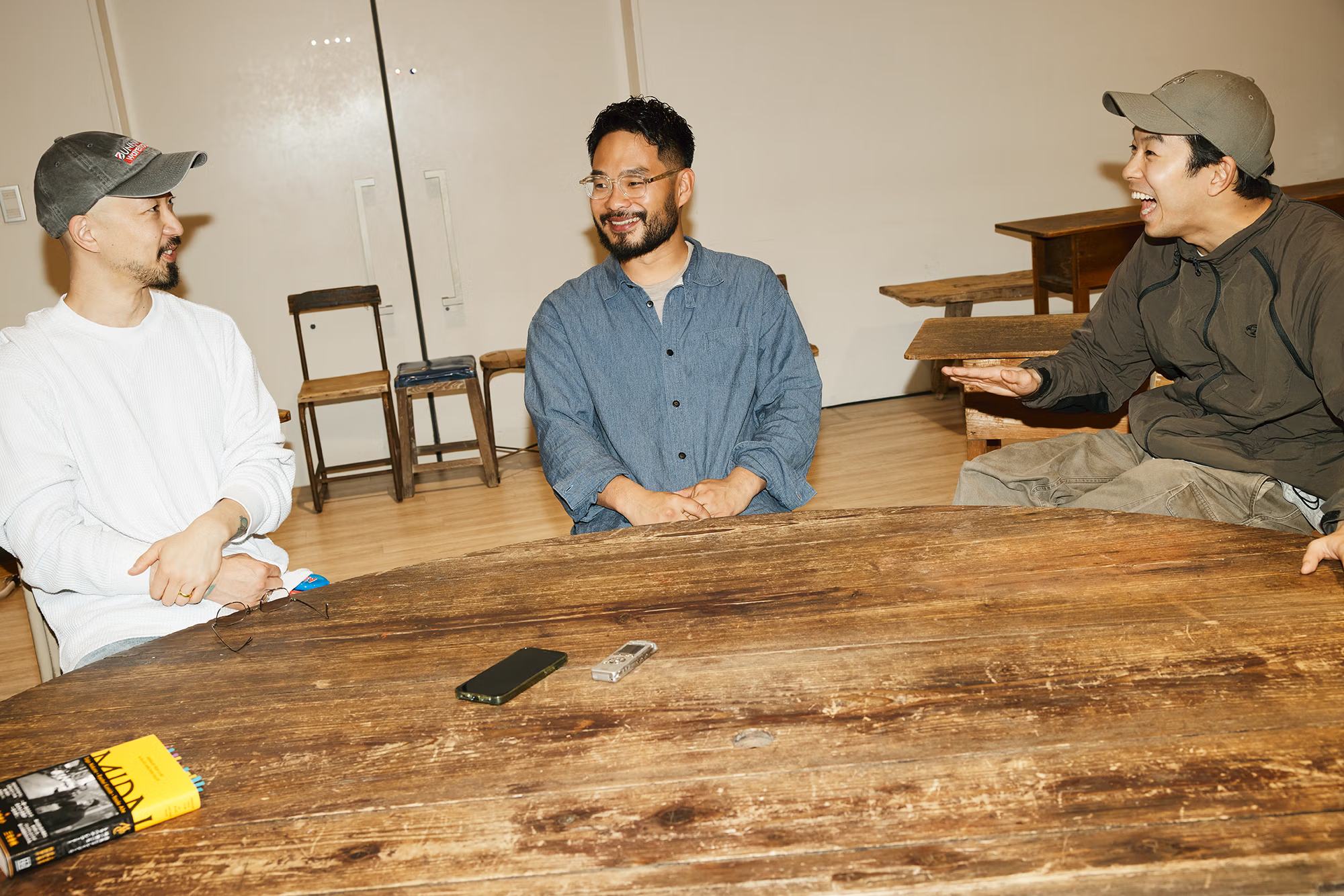
── Who was the first person to come up with that Globe-Trotter concept?
Kamide: That was me.
Taiga Nakano (hereafter Nakano): No, it was me.
Abe: Actually, it was me.
Kamide: Well, let's just say we all thought of it at the same time. Though for the sake of the article, I don't mind if you credit me (laughs). Jokes aside, we're all from the generation that grew up reading those Globe-Trotter guides. The photos in them aren't pretentious, yet for some reason, they're incredibly striking. At the end of the day, those guides remain a special part of our foundational travel experiences. That's why I wanted this book to be something that anyone who's had even the slightest urge to travel would want to pick up.
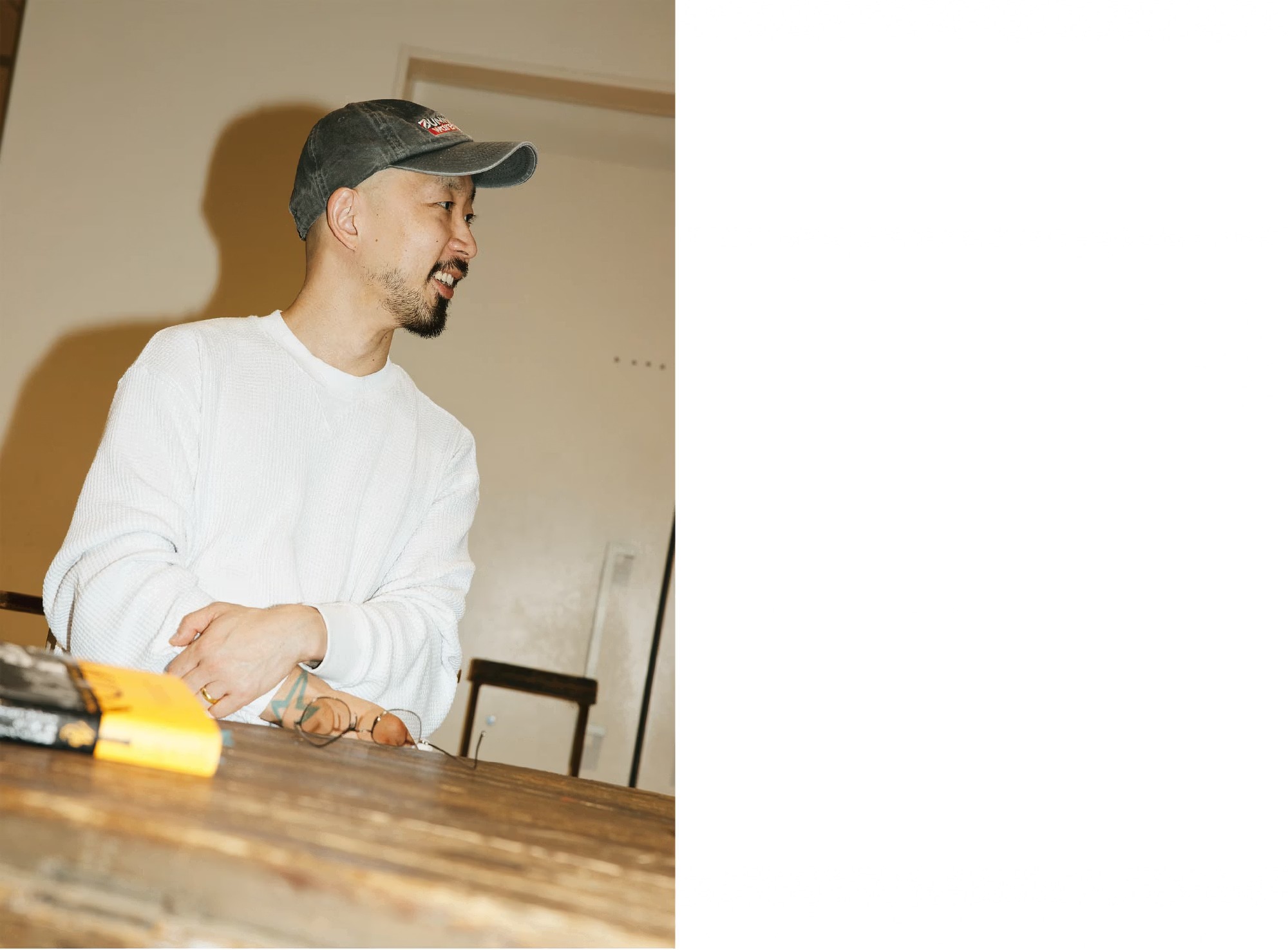
── Did the three of you have specific roles or a division of labor during the preparation phase?
Kamide: Yusuke handled everything for the trip preparation. It wasn't even about dividing roles; it's probably more accurate to say "we didn't divide the work" at all. From the schedule to the destination, it was all him. Since the Langtang Valley in Nepal is a place he knows well, it was very much a "Yusuke Abe Presents" kind of trip where he wanted to take the two of us along.
It must have been quite a struggle for him, though. I arrived empty-handed from New York with no climbing gear, boots, or even a backpack. I was just like, "Yusuke, do you have my gear?" (laughs).
Abe: I brought two suitcases packed to the brim. I was complaining the whole time, though (laughs). Everything was so hectic back then that I don't remember much, but I feel like I could do a better job now.
Kamide: Taiga and I didn't even really know where we were going (laughs). We didn't look up anything, did we?
Nakano: I didn't look up a single thing. I kept calling our destination village, Kyanjin Gumba, "Ganjang-gejang" the whole time (laughs). I couldn't even remember the name of the place until we actually got there.
── Didn't you have any concerns?
Nakano: I wasn't really worried because Yusuke had been there so many times. I did do some altitude training to avoid altitude sickness, though. Since we were going up to nearly 4,000 meters, Yusuke and I went to a training center twice. But since this project started back in 2023, it was so long ago that my memory is a bit...
── I heard the book has already been reprinted several times. The response has been incredible. You’ve really played to your individual strengths in writing, photography, and performance, but what did you discover that only this specific group of three could have found?
Abe: For me, the biggest thing was how my perspective on "travel and photography" shifted. I’ve been doing this since my student days, so I was pretty sure my style was set in stone. But then the "beer incident" on that trip changed everything
Kamide: Ah, the beer incident.
Abe: My personal rule was always that travel had to be cheap and you just had to tough it out. But then Taiga suggested, "Let's just make this as fun as possible." That completely blew my old mindset out of the water (laughs). Since then, the way I travel has completely changed. If I want a drink, I just enjoy it instead of forcing myself to suffer. It’s even had a major impact on how I take photos.
Kamide: All three of us have done our fair share of traveling and already had our own ways of doing things. That’s why it was so interesting to see what happened when we actually got together. Yusuke is surprisingly sensitive; he hates running into trouble and is really careful about not getting sick. Once he decides a certain dish in a region works for him, he’ll eat nothing else. On the other hand, I want to pack in as many new experiences as I can, so I want to eat something different every day. And Taiga is such a foodie—for him, a meal has to be delicious. It was just really cool how all our priorities and ways of enjoying ourselves were so different.
Nakano: I never really thought about it myself, but I had an unexpected realization. "I can sleep just about anywhere."
Kamide: Honestly, it's true. Yusuke and I are both incredibly sensitive to our sleeping environment; if anything's off, we can't sleep at all. Yet Taiga is out in an instant. And despite that, he still tries to get a private room for himself. As a person... well, I don't want to be too blunt, but it really shows his character (laughs).
Abe: Ryohei and I are more the "behind-the-scenes" types. If we're sharing a tent, we end up being so considerate of each other that we're almost afraid to move.
Kamide: Exactly. When I'm with Yusuke, I'm always thinking, "What if I snore?" or "Will I wake him up if I toss and turn?" But with Taiga, he's snoring within seconds, so I can relax knowing he won't even notice if I'm rustling around a bit.
Nakano: They're always telling me, "You can sleep anywhere, so you're built for travel" (laughs). From my perspective, they both have so much mountain knowledge and technical skill that I was constantly learning from them. But even on the technical side, it was funny how their opinions were total opposites. For example, when you're walking along a cliff, should you plant your trekking pole on the valley side or the mountain side?
Kamide: We follow different schools of thought.
Nakano: Yusuke is a "valley side" guy. He says because the mountain side is full of rocks, hitting one could cause the pole to kick back and knock you into the valley. It sounds convincing, right? But then Ryohei is a "mountain side" guy. He says the ground on the valley side is fragile, so if your pole slips through, you'll just fall.
── They both make a good point.
Nakano: So I just switched between the two (laughs). Even what to wear to bed was like that. Ryohei would say, "Wear warm clothes when it's cold and get in your sleeping bag," while Yusuke would say, "Get in wearing next to nothing. That way your body heat circulates in the bag, and you'll feel even warmer when you put your clothes on in the morning."
Abe: If you did what Ryohei said, you might actually end up with hypothermia.
Kamide: Well, there actually is a "naked" school of thought, but it really depends on the conditions. This would turn into a long story, so I'll stop there.
Nakano: In the end, I wear clothes when it’s cold and take them off when it’s hot. I just landed on the most obvious answer (laughs).
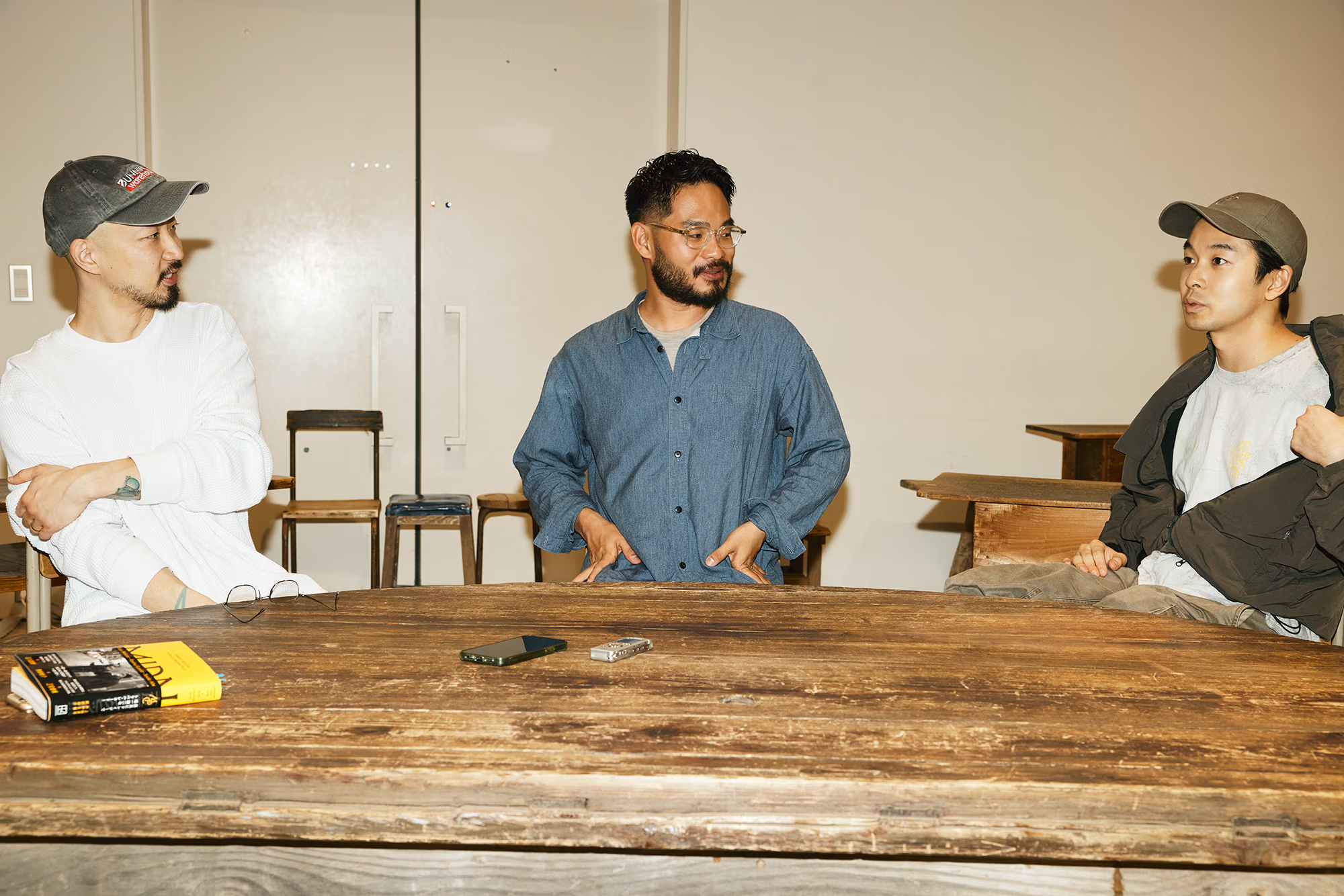 "I wear MPC gear all the time," Taiga says. He was sporting a cap and T-shirt that day, too.
── Spending time with others really highlights your own quirks. I'd like to ask about the creative output, like the photos and writing. As a professional photographer, Mr. Abe, how did you see Mr. Nakano's photography?
Abe: When I saw what Taiga was shooting, I thought, "Oh, if he's getting these, then I don't need to." So there was never any friction at all. I was there as a professional, but there are just some photos that only Taiga can take.
Looking back at the finished work recently really blew me away. I’ve been to Nepal so many times that I don't stop to photograph things like utility poles, monks, or pigeons anymore, but Taiga captured all those everyday things from his own perspective. It was really inspiring. It showed me a side of the place I hadn't seen, and it felt like I got to enjoy the trip two times over.